

The first role of government is to protect its citizens from harm and that often means communicating safety messages quickly to communities in the language they understand. An impending storm or raging forest fire on target to strike a neighbourhood, will not wait for officials to translate alerts into locally used languages, so speed is vital.
It’s no surprise, then, that many turn to free tools like ChatGPT to translate alerts into multiple languages. At first glance, it seems like the perfect solution: fast, convenient and, helpfully, free to use. But “free” is rarely free. And when it comes to translating information that is sensitive, the hidden costs can be enormous.
The hidden price of free translation tools: your data
Whenever you paste internal documents, contracts, customer data, or commercially sensitive information into ChatGPT, you are effectively surrendering that data to the platform.
What many people still don’t realise is this:
Using ChatGPT involves sharing your data with OpenAI, where it may be accessed, processed, or used in ways that your organisation cannot fully control.
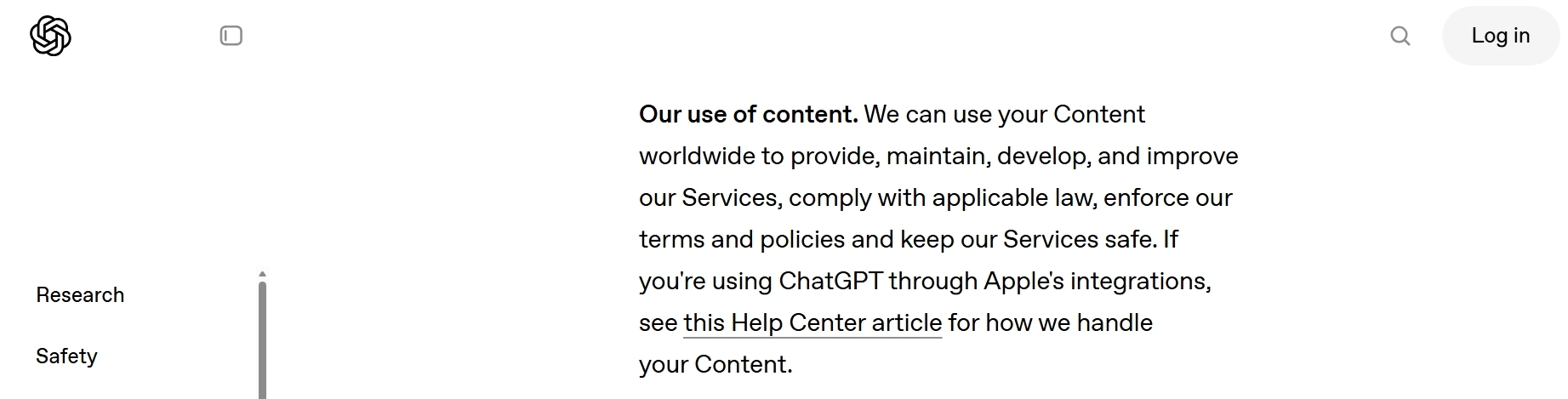
Extracted from the ‘Content’ Section from ChatGPT’s Terms of Use.
In government agencies and regulated industries like finance, healthcare, energy, mining, and defence, using free tools like ChatGPT and Google presents serious compliance and data security risks. The concerns fall under four key areas:
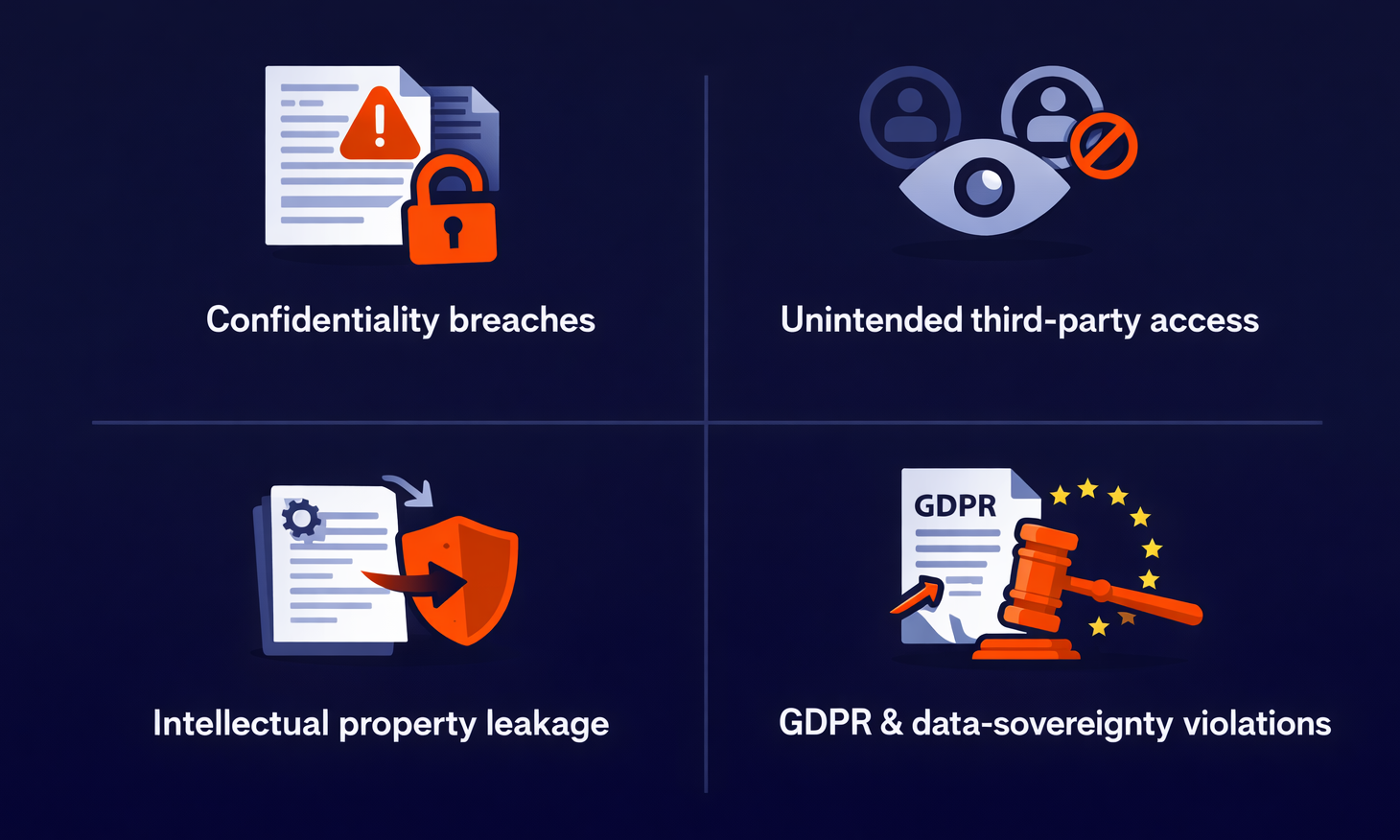
- Confidentiality breaches – the organisation may be sharing private data without consent
- Unintended third‑party access – private data can be seen by others who should not see it
- Intellectual property (IP) leakage – the organisation is transferring IP rights to another to use and potentially sell
- GDPR and data‑sovereignty violations – the organisation may be exposed to violations of the law by sharing data
In other words, by using “free” translation tools, many organisations unknowingly pay with their most asset: their data.
Accuracy problems: a bad translation can become a big liability
Recently, the UK police wrongfully banned Israeli football fans from a match, as a result of an AI mistake in their report. This caused diplomatic tensions with Israel and adversely affected the reputation of the UK government.
This signifies one thing: as ChatGPT and similar models are trained largely on public datasets scraped from the internet, they are riddled with inaccuracies and bias.
The translations these models produce are often imprecise or factually wrong, and the wittiness of AI mimicking human logic means they can create convincing lies.
This can escalate into major issues, in which people are harmed by:
- Incorrect safety instructions
- Misinterpreted legal obligations
- Faulty technical documentation
For government and organisations, this can lead to litigation for alleged negligence, when risks that were foreseeable could have been prevented. It results in the award of compensation for damages, financial penalties for wrongdoing and a loss of public trust that is hard to recover.
The alternative: secure, private, high‑accuracy AI translation
Protecting people and organisations from AI risks is at the heart of why GAI Translate was developed.
In collaboration with AI pioneers at Sheffield Hallam University (SHU) in the UK with backing from the British government, tested, proven and now launched, GAI and the new domain specific GAI SLMs (Small Language Models) are transforming how organisations introduce ethical AI to manage multilingual communication.
GAI has even been honoured with the Security & Safety Entrepreneur Market Disruptor Award for creating a secure alternative to ChatGPT and Google.
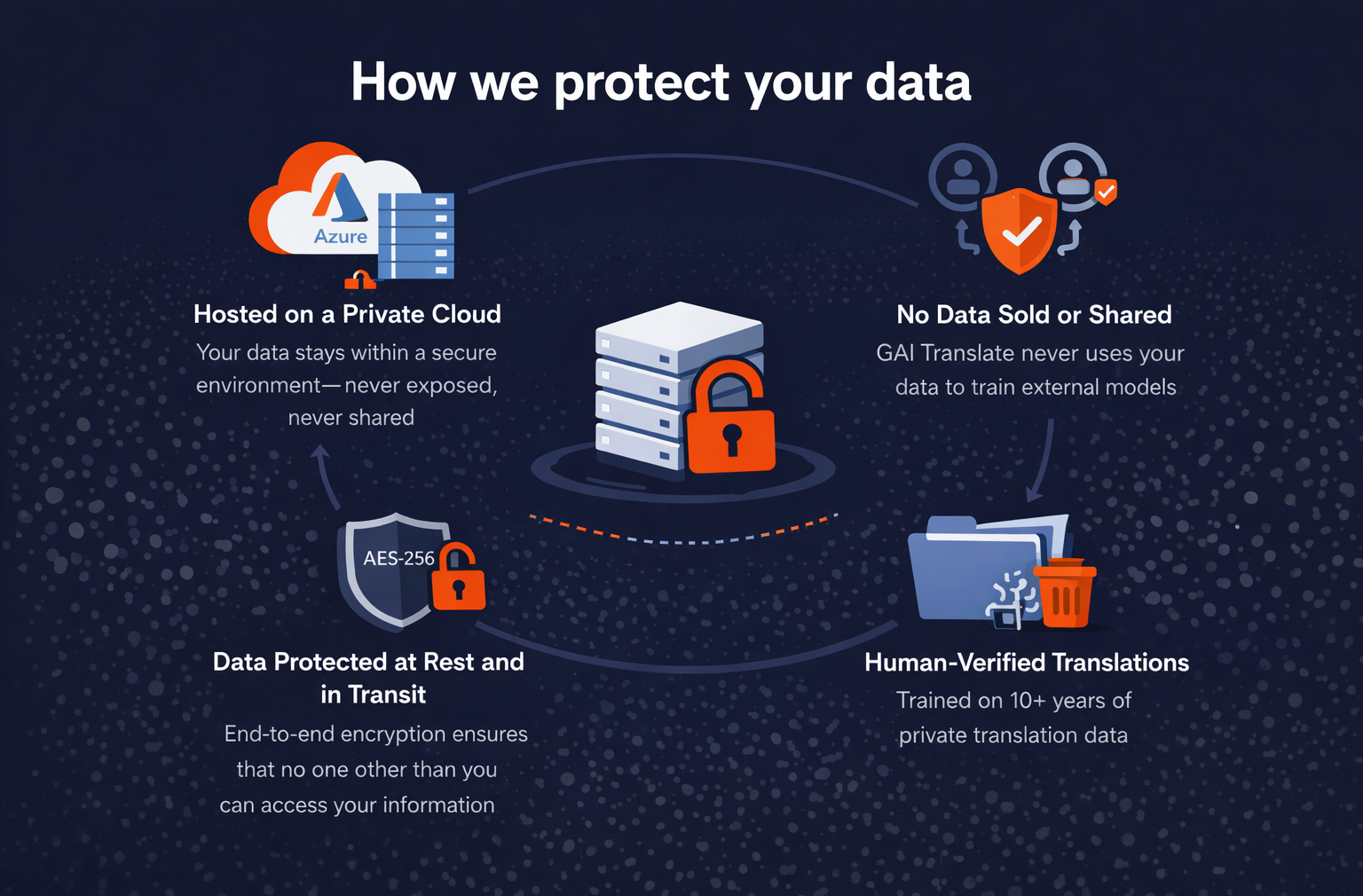
Unlike public models, GAI Translate is built for organisational security from the ground up:
- Hosted on a private cloud: Your data stays within a secure environment, never exposed, never shared.
- Data protected at rest and in transit: End‑to‑end encryption ensures that no one other than you can access the information you translate.
- No data sold, shared or used to train external models: GAI Translate guarantees that your information is never used to train models for third parties.
- Trained on 10+ years of human‑verified, private translation data: Guildhawk’s expert linguists have created a world‑class dataset over more than a decade. This means that unlike ChatGPT, GAI translations are consistent, industry‑accurate, culturally sensitive, and trustworthy.
- Accuracy that reaches 100% with custom GAI Small Language Models (GAI SLMs): When organisations train their own GAI SLMs, accuracy achieves unprecedented levels, validated across the four industry standard quality benchmarks. This makes GAI SLMs the most accurate AI translation solution currently available.
The best of both worlds: speed without risk
GAI Translate gives organisations the speed and convenience of modern AI tools, but without the vulnerabilities of public platforms like ChatGPT. With GAI Translate, organisations get:
- Fast, AI‑powered translations
- Microsoft Enterprise‑grade security
- The most accurate translation results
- Zero data risk
- Zero model training data leakage
- Zero hallucinations
It’s everything decision‑makers want AI to be, and precisely what free tools cannot provide. Matthew Ross, Guildhawk’s representative in the United States, put this into context by saying:
“GAI doesn’t just create the most accurate AI translations, it’s a bridge that builds trust cross communities and protects organisations from the risks associated with deploying Artificial Intelligence”.
Conclusion: don't trade your data for convenience
In a world where data breaches, compliance failures and cyber threats are rising, no organisation can afford to hand sensitive information to a public AI model.
The future belongs to secure, private, accurate AI translation built for the enterprise. And that future is already here with GAI Translate.

